
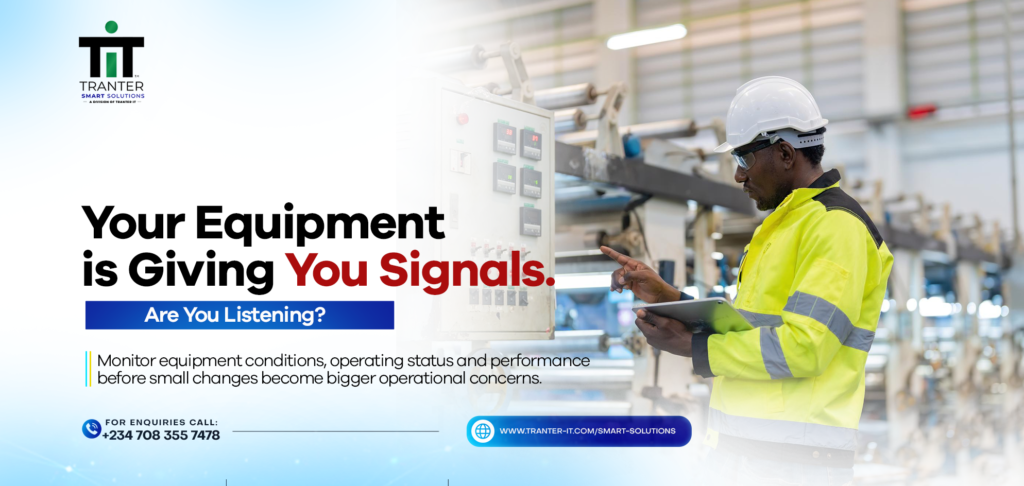
A machine can show signs of a developing problem long before it stops working. Condition-based machinery monitoring gives maintenance and engineering teams greater visibility into those changes while equipment is still operating. Instead of relying only on scheduled inspections or waiting for a breakdown, organisations can monitor relevant equipment data, identify conditions that require investigation and make more informed maintenance decisions.
For organisations managing generators, pumps, compressors, motors, production equipment and other critical machinery, that visibility can support better maintenance planning and help reduce the risk of unexpected operational disruption.
What Is Condition-Based Machinery Monitoring?
Condition-based machinery monitoring is a maintenance approach that uses information about an asset’s current condition to help determine when maintenance may be required.
Rather than depending entirely on fixed maintenance intervals, teams monitor equipment conditions and look for changes that may require investigation. Condition-based maintenance can use sensors and other monitoring equipment to collect performance data, identify patterns, and detect anomalies.
This matters because equipment conditions can change between scheduled inspections. A component may begin behaving differently, a reading may gradually move outside its normal range, or an abnormal condition may develop without immediately causing a complete failure.
Monitoring those changes gives maintenance teams additional information to work with.
The objective is not to replace scheduled maintenance. Instead, it is to add greater visibility to existing maintenance processes.
Why Critical Equipment Needs Better Visibility
Not every machine has the same operational importance.
For some organisations, an emergency generator may be essential when normal power becomes unavailable. For others, pumps, compressors, motors, or production equipment may be critical to day-to-day operations.
The condition of this equipment matters even when everything appears to be working normally.
A scheduled inspection provides a useful snapshot of a machine at a particular point in time. However, the equipment continues operating after the inspection, and its condition can change before the next one.
That creates an important question for maintenance teams:
Has anything changed since the last inspection?
Remote or periodic monitoring can provide additional visibility between physical inspections, including information about whether equipment is operating, when its operating status changes and how its uptime and downtime develop over time.
Instead of relying only on whether equipment has been serviced, teams can also consider current equipment information when deciding where further investigation may be necessary.
How the Adeunis Modbus Master Supports Machinery Monitoring
The Adeunis MODBUS MASTER is designed to collect information from Modbus devices and transmit that information through an LPWAN connection.
This creates a simple monitoring pathway:
Modbus equipment → Adeunis MODBUS MASTER → LPWAN → Monitoring platform
The approach is particularly relevant where existing equipment already provides operational information through the Modbus protocol.
Rather than leaving that information at the equipment level, the Modbus Master can provide a connection between Modbus equipment and a wider remote monitoring environment.
This gives organisations a way to bring equipment-level information into a broader monitoring process.
What Does the Modbus Master Actually Do?
The value of the Modbus Master begins with the information available from connected Modbus equipment.
The device can query, read and write registers on supported Modbus equipment. It also supports configured minimum and maximum thresholds, together with periodic and event-based transmission.
In a practical monitoring setup, this means the device can:
- Read information from connected Modbus equipment.
- Transmit equipment data through an LPWAN connection.
- Use configured thresholds to identify conditions that require attention.
- Support supported read and write operations with connected Modbus equipment.
- Create a link between equipment-level data and a remote monitoring workflow.
This connection is important because equipment data becomes more useful when it can be accessed as part of a wider maintenance process.
From Equipment Readings to Early Investigation
Data alone does not solve an equipment problem. The value comes from what teams can do with the information.
Consider a monitored equipment parameter that begins moving outside its normal operating range.
That change does not automatically mean the equipment is about to fail. It can, however, give an engineer a reason to investigate.
The team may inspect the relevant component, review other operating parameters, or compare the current reading with historical information.
This is where condition monitoring becomes useful.
Measurements such as temperature, pressure, and vibration can provide information about equipment condition and help identify changes or anomalies. Trend monitoring can also help teams understand whether a change is temporary or part of a developing pattern.
Therefore, effective monitoring is not simply about seeing a reading.
It is about understanding what has changed and whether that change matters.
Why Threshold-Based Monitoring Matters
The amount of data generated by industrial equipment can quickly become difficult to manage manually, particularly when an organisation is monitoring multiple assets.
Threshold-based monitoring can help direct attention towards specific conditions.
The Adeunis MODBUS MASTER supports event-related transmission based on configured high or low thresholds, as well as periodic data transmission.
For example, an engineering team may establish a threshold for a particular monitored parameter. When the defined condition occurs, the device can transmit information for further review.
This does not remove the need for engineering judgment.
A threshold does not automatically determine whether equipment requires maintenance. Instead, it can help bring a potentially significant change to the attention of the people responsible for the equipment.
That is why thresholds should be based on the equipment, its operating conditions and the objectives of the monitoring programme.
Scheduled Maintenance and Condition-Based Monitoring Can Work Together
Condition-based machinery monitoring does not mean abandoning preventive maintenance.
Scheduled inspections, servicing, and established safety procedures continue to have an important role, especially when dealing with critical equipment.
Monitoring can complement those activities by providing information between inspections.
A scheduled inspection tells a maintenance team about the equipment at the time of that inspection. Monitoring can provide additional information about how its condition changes afterwards.
This can help teams decide where further investigation may be worthwhile and whether a change in equipment condition needs attention.
The result is not necessarily a replacement for scheduled maintenance. Instead, organisations can use equipment condition data alongside their existing maintenance practices.
Can Monitoring Help Reduce Unplanned Downtime?
No monitoring system can guarantee that equipment will never fail.
However, having earlier visibility into changing equipment conditions can give maintenance teams more opportunity to investigate potential problems before they become larger operational issues. Condition monitoring can support earlier identification of potential equipment problems and help teams respond before an issue develops further.
This can be particularly relevant where equipment failure could interrupt critical operations.
For example, an unexpected issue with a generator may affect backup power availability. A problem with a pump, compressor, motor or production machine could have consequences for other parts of an operation.
The earlier a relevant change becomes visible, the more information the maintenance team has when deciding what to do next.
The Role of Remote Monitoring in Industrial Operations
Physical inspections remain important, but they are not always convenient.
Equipment may be distributed across several locations. Some assets may also be difficult or time-consuming to access regularly.
Remote monitoring can help reduce the distance between equipment and the teams responsible for it.
A connected monitoring solution can collect information at the asset level and transmit it to a platform where teams can review the data.
With the Adeunis MODBUS MASTER, Modbus data can be transmitted through an LPWAN connection, with configurable transmission periods and event-driven transmissions based on defined thresholds.
This allows equipment monitoring to become part of a wider maintenance process rather than relying entirely on physical visits.
What Should Teams Monitor?
There is no single set of parameters that applies to every machine.
The right information depends on the equipment being monitored, how it operates and the failure conditions that matter most.
Depending on the machinery and available sensors or instruments, monitoring may include parameters such as:
- Temperature
- Pressure
- Vibration
- On/Off Status
- Operating conditions
- Other relevant equipment measurements
Monitoring On/Off status can also give teams visibility into whether equipment is operating when it is expected to be running. Over time, this information can help teams understand equipment uptime and downtime, identify unexpected changes in operating patterns, and investigate situations where equipment is running for longer or shorter periods than expected.
For generators, the monitoring priorities may relate to conditions that provide insight into their readiness, operating status, and performance.
For pumps, compressors, motors and production equipment, the most useful parameters may be different.
That is why the first step should not simply be choosing a monitoring device.
Teams should first determine:
Which equipment matters most?
Which operating conditions provide useful information about its condition?
What constitutes a meaningful change?
What should happen when that change occurs?
Once those questions are answered, the monitoring solution can be structured around information that supports actual maintenance decisions.
A More Proactive Approach to Equipment Maintenance
The purpose of condition-based machinery monitoring is not to collect more data for the sake of it.
It is to give maintenance and engineering teams better visibility into equipment condition.
By monitoring relevant equipment information, teams can identify changes from expected conditions and investigate potential issues while machinery is still operating.
The Adeunis MODBUS MASTER supports this approach by communicating with Modbus equipment and transmitting its data through an LPWAN connection. It also supports periodic and event-related transmission based on configured thresholds.
This information can then be considered alongside physical inspections, servicing schedules, and engineering judgment.
The result is a maintenance process where decisions can be supported by more current information about equipment condition.
Don’t Wait for the Machine to Stop
A machine can change before it stops working.
The challenge is recognising which changes matter.
Condition-based machinery monitoring gives facility, engineering and industrial teams a way to observe equipment conditions, identify meaningful changes, and support more informed maintenance decisions.
Whether the asset is a generator, pump, compressor, motor or another critical machine, better visibility can help teams understand what is happening between scheduled inspections.
The goal is not simply to know when equipment has failed.
The goal is to understand its condition while it is still running.
Want to make your equipment and machinery monitoring more proactive?
Talk to Tranter Smart Solutions.