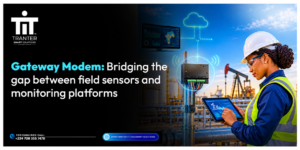
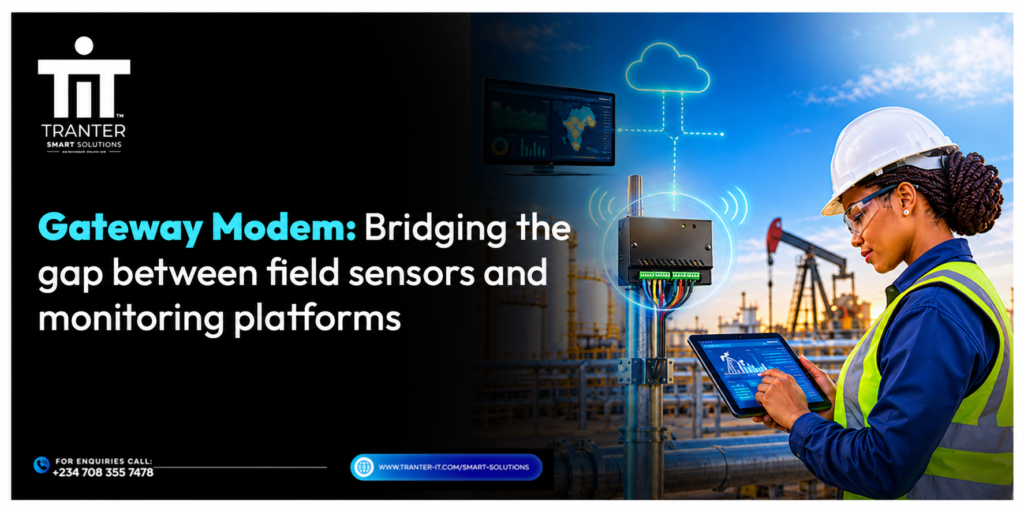
An oil wellhead can be operating miles away from the control room, collecting valuable information about pressure, temperature, flow and other field conditions. However, collecting that information is only part of the job. The Gateway Modem helps bridge the gap between field sensors and remote monitoring platforms, allowing operational data to reach the systems teams use to monitor assets and make decisions.
For oil and gas operators, this connection matters. A sensor can measure a change in field conditions, but that measurement becomes more useful when the relevant data reaches the people responsible for reviewing it. Without a suitable communication link, organisations may struggle to build a consistent picture of what is happening across remote assets.
The Challenge: Collecting Field Data Is Not Enough
Oil and gas operations often involve wellheads, storage tanks and other equipment spread across large or remote sites. These assets generate information that can help teams understand operating conditions, track changes and identify areas that need attention.
Yet collecting that information and making it accessible are two different tasks.
Consider a storage tank farm where operators need to monitor liquid levels across several tanks. If personnel must visit each location to collect routine readings, they spend time travelling between assets. Meanwhile, changes that occur between scheduled checks may not appear in the team’s records until the next visit.
The same challenge applies to remote wellheads. Field sensors can measure parameters such as pressure and temperature, but operators still need a way to receive those readings at a monitoring platform.
Manual inspections remain important for maintenance, safety and verification. However, relying on physical visits as the primary means of collecting routine data can limit how frequently teams access information.
The problem, therefore, is not always a lack of data. It can be the gap between the data collected in the field and the systems used to review it.
Why Connectivity Matters in Digital Oilfield Operations
Digitalisation offers practical opportunities for oil and gas operations, but its value depends on how organisations use connected technologies.
The International Energy Agency (IEA), in its report Digitalisation and Energy, published on 5 November 2017, discusses how digital technologies can improve productivity and safety in the energy sector. It also examines the potential of sensors, connected systems and other digital applications in oil and gas operations. Read the IEA report, Digitalisation and Energy.
Although this report is not recent research, it provides useful industry context for understanding why digital connectivity matters.
For operators, the practical lesson is straightforward: collecting measurements is only one part of an effective monitoring system. Teams also need an appropriate way to transfer that information to the systems where they can review it.
A connected monitoring arrangement typically involves three elements:
- Field sensors: Capture measurements such as pressure, temperature, flow or tank levels.
- Communication hardware: Helps transfer data from connected field devices to the appropriate system.
- Remote monitoring platform: Presents the available information so authorised users can review readings and assess changes.
Each component has a distinct role. When the components work together, field data becomes more accessible and useful for operational decision-making.
How the Gateway Modem Connects Field Sensors to Monitoring Platforms
The Gateway Modem serves as an interface between field sensors and a remote monitoring platform. According to the Tranter Smart Solutions product catalogue, it supports data collection and transmission from connected assets within an industrial Internet of Things (IoT) system.
Its role is to help move operational data from the field to the systems where teams can access it. This provides a foundation for connected monitoring across oil and gas operations.
However, the modem is one part of a wider system. The sensors, communication network and monitoring platform must be compatible and configured appropriately for the complete arrangement to work as intended.
- Supporting Digital Oilfield Operations
Digital oilfield initiatives use connected technologies to improve visibility across field operations. For example, sensors installed at a wellhead can collect information about pressure, temperature or flow. With suitable communication hardware and network connectivity, that information can be transmitted to a remote monitoring platform.
Operators can then review the available readings without relying solely on physical visits to obtain routine measurements.
- Improving Visibility Across Storage Tank Farms
Storage tank monitoring requires access to reliable information about tank conditions, including liquid levels where appropriate sensors are installed. When compatible sensors transmit their readings to a monitoring platform, teams can review reported levels remotely and identify when further checks may be necessary.
The Gateway Modem supports the communication side of this process. The appropriate sensors measure the relevant parameters, while the modem helps transfer the data to the monitoring environment.
- Supporting Remote Asset Management
Managing assets across multiple locations can place demands on field personnel, particularly when routine checks require significant travel. A connected monitoring system can help teams access information from distributed assets and use that information to prioritise inspections and follow-up activities.
The OTC Gateway Modem can form part of this arrangement by supporting data transmission between field sensors and remote monitoring platforms.
The actual benefits depend on the wider system, including network availability, sensor capabilities and the frequency at which data is collected and transmitted.
What Does This Look Like in Practice?
Imagine an oil and gas company managing several storage tanks across a large facility. Previously, personnel travelled between locations to collect routine readings and report them to the operations team.
Although this process provided useful information, it also created gaps between checks. If a tank’s reported condition changed after an inspection, the team might not become aware of that change until the next scheduled visit.
The company introduces a connected monitoring arrangement using compatible sensors, appropriate communication hardware and a remote monitoring platform. The Gateway Modem helps transfer field data to the platform.
Now, authorised personnel can review the readings available through the system without visiting every tank simply to collect routine measurements.
This does not eliminate physical inspections or guarantee that every change will be detected immediately. Instead, it gives the team another way to access operational information and decide where further investigation is needed.
The difference is practical. Rather than depending entirely on scheduled data collection, the team can use remotely available readings to support its monitoring activities.
Better Connectivity Creates Opportunities for Better Decisions
Connecting field sensors to a monitoring platform is not the end goal. The real value comes from how teams use the information they receive.
A single pressure reading provides a snapshot of conditions at a particular moment. When operators can review a series of readings, they may be able to identify changes over time and compare current conditions with historical performance.
Likewise, tank-level data can help teams review reported inventory conditions, while temperature measurements can provide additional information about the assets being monitored.
However, these insights depend on data quality, sensor accuracy, communication reliability and the monitoring platform’s capabilities. The modem supports the flow of information, but it does not independently interpret every reading or determine what action an operator should take.
That responsibility remains with the wider monitoring system and the people who understand the operational context.
For organisations planning a digital oilfield project, it is therefore worth considering the entire data journey: what needs to be measured, how the information will be transmitted, where it will be displayed and who will use it.
Connect Your Field Data with Tranter Smart Solutions
Remote oil and gas assets generate information that can support more informed operational decisions. However, that information becomes useful only when organisations can collect, transmit and access it through a suitable monitoring arrangement.
The Gateway Modem from Tranter Smart Solutions helps bridge the gap between field sensors and remote monitoring platforms. It supports data collection and transmission for applications such as digital oilfields, tank monitoring and remote asset management.
For organisations looking to improve visibility across their operations, the starting point is understanding which assets need monitoring and how their data should reach the people responsible for acting on it.
Explore how the Gateway Modem can support your oil and gas monitoring requirements. Contact Tranter Smart Solutions to discuss your application.