Introduction: The Room Where IT Problems Get Honest
Picture a room full of IT managers, system administrators, and technology leaders, people who spend their days firefighting, patching, provisioning, and troubleshooting.
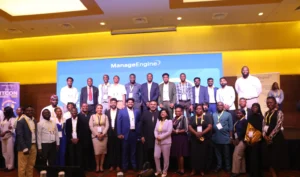
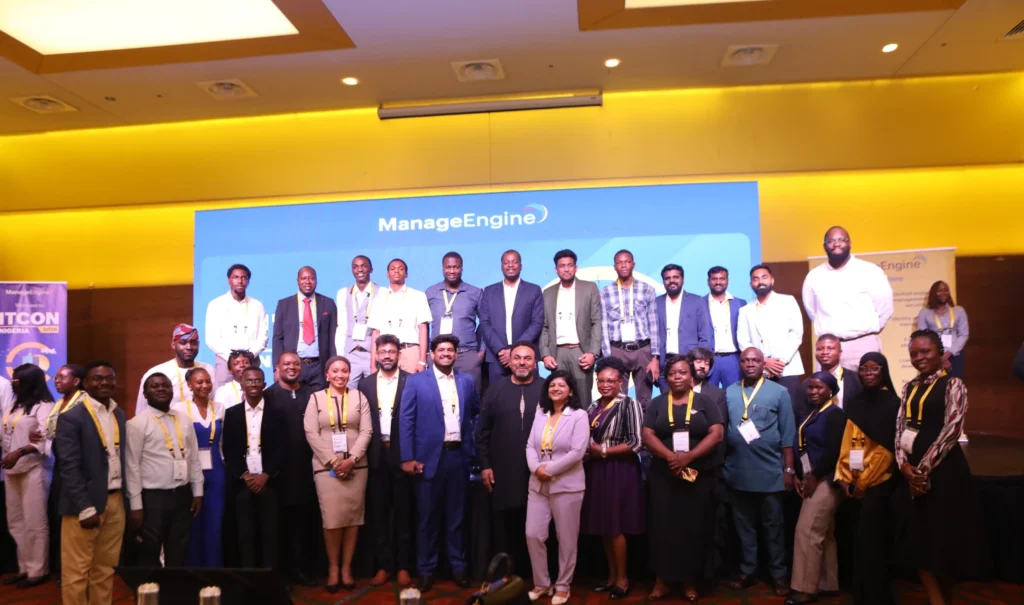
Now picture them sitting still for a full day, not because they had to, but because what was being said on stage actually mattered. That was ITCON 2026: a full-day conference that brought 260 attendees through the doors. These were IT professionals spanning industries from financial services and healthcare to manufacturing and the public sector, representing organisations ranging from growing mid-sized businesses to large enterprises. Those numbers speak to just how hungry IT professionals are for honest, practical conversation.
From the first session to the closing Q&A, the event was a rare convergence of practical insight and strategic thinking. No fluff. No vague vendor pitches. Just a focused, honest conversation about the challenges facing modern IT teams and what tools and frameworks are actually helping them get ahead.
Here’s what happened, what was said, and why it matters.
The Problem Every IT Team Recognises (But Rarely Names)
Ask any IT leader what their biggest challenge is, and you’ll get a dozen different answers: ticket volumes, security gaps, compliance pressure, legacy infrastructure, understaffed teams. But underneath all of those answers, there’s usually one deeper issue: a lack of unified visibility and control.
Systems don’t talk to each other. Security tools don’t integrate with service management workflows. Endpoint data sits in one place while identity management sits in another. IT teams aren’t failing because they lack effort; they’re failing because their tools were built in silos.
This tension was the thread running through every session at ITCON 2026, and it set the stage for something more valuable than a product showcase: a smarter way to think about IT altogether.
Setting the Stage
The day opened with a welcome address from ManageEngine’s Regional Manager for West Africa, Srinivasan Rajasekar, who grounded the audience in the central theme of the day: fragmented IT environments are expensive, not just in licensing costs, but in time, talent, and risk. His message was clear: integrated platforms aren’t a luxury anymore; they’re a prerequisite for functional IT.
That sentiment found an echo among attendees. The Chief Executive of Tranter IT, Dr Lare Ayoola, put it plainly: “ManageEngine pays attention to the needs of clients.” It’s a simple observation, but in an industry where vendors are often criticised for building products that serve their roadmaps more than their customers, it landed with weight.
Session Recaps
Re-imagining ITSM: ServiceDesk Plus in Action
The first deep-dive session tackled IT Service Management (ITSM) through the lens of ServiceDesk Plus, and it pulled no punches. Modern ITSM isn’t just about closing tickets faster. It’s about building secure, repeatable
workflows that reduce human error and create accountability. The session walked through how organisations can reimagine their service desk, not as a cost centre, but as a strategic function, using automated approval workflows, embedded security checkpoints, and SLA analytics that pinpoint exactly where service bottlenecks form.
For attendees still running ITSM on spreadsheets or disconnected ticketing tools, the session was a practical blueprint for what better looks like.
Cybersecurity Starts at the Endpoint
If the ITSM session got people leaning forward, this one had them taking notes.
The core argument: most security breaches don’t start at the firewall; they start at a misconfigured endpoint. Using Unified Endpoint Management and Security (UEMS), the session demonstrated how organisations can shift from reactive patching to proactive control. Attendees saw live demonstrations of compliance policy enforcement across distributed devices, vulnerability detection ahead of incidents, and unified management of both on premises and remote endpoints from a single interface.
The session also highlighted how UEMS integrates directly with service management workflows, closing the loop between endpoint health and IT operations, a capability that drew particularly strong engagement from the room.
In an era where hybrid work is permanent, managing endpoints through disconnected tools is no longer tenable. The session made a compelling case for why unified management isn’t just convenient; it’s a security necessity.
Managing AD and Microsoft 365 the Hybrid Way
Attention turned to identity, arguably the most underestimated attack surface in the modern enterprise.
The hybrid Active Directory and Microsoft 365 session was one of the most technically detailed of the day. It explored the real-world complexity organisations face when users and devices are split across on-premises AD and cloud-based Microsoft 365environments, and the audit failures, access control issues, and security blind spots those gaps can create.
The session walked through how ManageEngine’s Active Directory and M365 management tools address these challenges directly: automated provisioning that eliminates manual onboarding errors, role-based access controls that enforce the principle of least privilege, and unified reporting that gives IT and compliance teams a single, coherent view across both environments.
For organisations managing hybrid identity at scale, the tooling on display offered a particularly concrete path forward.
The takeaway resonated strongly: you can’t secure what you can’t see, and hybrid
identity environments are especially difficult to see clearly without the right tooling.
Future-Ready IT: Full-Stack Observability and AI
Full-stack observability is one of those concepts that sounds technical but translates very practically. It provides complete, real-time visibility across your entire IT environment: applications, infrastructure, networks, and logs, so you can identify and resolve issues before they become crises.
The AI dimension was compelling. ManageEngine’s monitoring tools now incorporate AI capabilities that surface anomalies, predict failures, and reduce the alert fatigue that plagues most IT operations teams. The live demos showcased dashboards that don’t just display data; they help teams make sense of it, prioritise intelligently, and act faster. For organisations still operating in reactive mode, the session offered a clear and actionable roadmap toward proactive IT management.
What ITCON 2026 Really Proved
With 260 professionals in the room, representing a broad cross-section of industries and company sizes, ITCON 2026 was a clear signal that the industry is actively searching for answers. Organisations are navigating unprecedented complexity: distributed workforces, expanding attack surfaces, AI-driven operations, and tighter
compliance requirements, all at once.
What the event demonstrated is that the answer to complexity isn’t more tools; it’s better integration. When ITSM, endpoint management, identity, observability, and security operate from a shared framework, IT teams stop fighting their tools and start using them.
Conclusion
The single most important insight from ITCON 2026 wasn’t a feature or a framework; it was a mindset shift. The best IT teams aren’t waiting for things to break. They’re building visibility, automating workflows, securing endpoints proactively, and using AI to anticipate problems before users even notice them. They’ve moved from firefighting to strategy. That 260 IT professionals gave up a full day to be in that room says something. The appetite for change is real. The tools to support it exist. If ITCON 2026 left attendees with one clear takeaway, it’s that the time to act is now, and ManageEngine’s suite of integrated solutions is built to help teams take that step.
To explore the tools discussed at ITCON 2026, book a demo with us.